2026-10-22
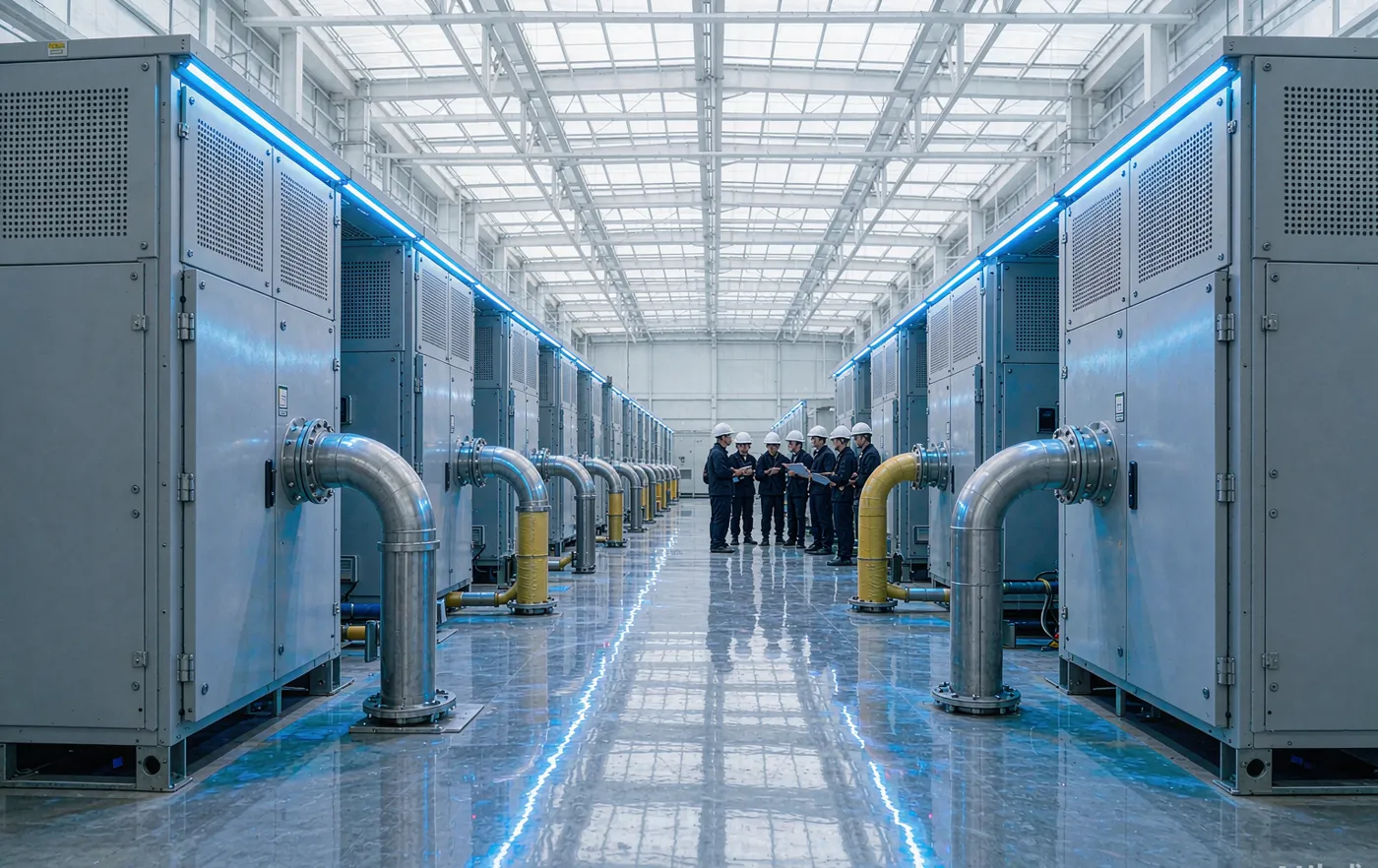
Customers often ask: "Can your 5kWh battery be used in a factory?" or the reverse: "Can a C&I cabinet power my home?" Neither is strictly impossible, yet almost nobody does it — because residential and commercial & industrial (C&I) storage, though both ESS, are built on two entirely different design philosophies.
Residential storage typically ranges from 5 to 30kWh on a 48–100V low-voltage battery bus, installed and commissioned by a regular electrician. C&I systems usually start at 100–500kWh with 400–800V or higher battery platforms for better conversion efficiency and lower cabling cost. The voltage class directly determines installation qualifications and safety codes.
Wall-mounted home batteries generate little heat, so air cooling (natural convection or fans) is sufficient. C&I cabinets run at higher C-rates with concentrated heat, so liquid cooling has become the mainstream — coolant flowing between cells keeps temperature spread within about 3℃, and every degree of uniformity buys consistency and lifetime.
The core value of residential storage is self-consumption and backup: store midday solar surplus for evening use, and keep the fridge, lights and internet alive during outages. The core value of C&I storage is economics: tariff arbitrage, demand-charge management, and higher solar self-consumption. In short, households buy peace of mind; businesses buy returns.
Residential systems connect to single- or three-phase LV networks, with certifications focused on household electrical safety. C&I systems connect to MV networks or dedicated transformers and must meet grid codes on low-voltage ride-through, frequency response and power quality — a far more demanding certification and approval path.
Residential EMS logic is simple: prioritize self-consumption, arbitrage tariffs, protect backup. A C&I EMS interfaces with tariff curves, transformer capacity and production-load forecasts, and may even participate in demand response for extra revenue — essentially an algorithm that earns money.
Residential is a consumer decision: brand, aesthetics and installation convenience matter. C&I is an investment decision: owners model IRR, contract on cycle life, and audit local service capability. This is why the two channels rarely overlap.
Homes should buy residential-grade systems, focusing on safety certification, installation fit and warranty terms. Factories and shops should buy C&I systems, focusing on tariff-model fit, liquid-cooling consistency data and the local service network. Before buying, hand your electricity bill to a supplier for a simulation — it beats any spec-sheet comparison.

Our mission and vision: Customer first, be the energy storage solution provider that creates the most value for customers.
 hrg1102@outlook.com